Showing posts with label 海藻 Seaweed. Show all posts

Monday, November 9, 2015

2014年収穫分 大西洋海藻 Atlantic Sea Vegetables 2014 Harvest


Marine Coast Sea Vegetables

Wild Harvested Seaweeds from Downeast Maine

マリン州の野生海藻

Tested by University of Maine, Environmental Radiation Lab


Canberra GermaniumDetector 
Tested February 9-26, 2015


2014 Harvest results Report dated March 2015 (150K PDF)


「2014年収穫分はほとんどが2015年に販売されますが、再び放射能検査をしました。結果は前年のものと一貫しており、バックグランドのレベルしか示しませんでした。」

。。。ということは、半減期2年のセシウムも半減期8日のヨウ素131も常に存在しているということでしょうか?

"For the 2014 harvest (products to be sold mostly in 2015), we again had samples of a selection of sea vegetables tested and the results are consistent with previous years, showing only background radioactivity. "

......Does this mean I 131 and Cs134 is alway existing there???


Thursday, January 15, 2015

日本産のり Japanese Nori Seaweed


産地 Origin: 日本 Japan

瀬戸内海 兵庫地区


購入年月 Purchase date: 
2014 年 11月14日 
(November 14, 2014)


購入場所 Purchase Place:
ふじやさんからの寄付
Donated By Fujiya Vancouver..THANK YOU!

  
測定日時 Date Tested: 
2015 年1月11日 (January 11,2015)

測定時間 Duration
86400 秒(seconds) 


重量 Weight: 0.145 kg


試料容器 Container:
1Lマリ ネリ容器(Marinelli)


検査機器 Detector: φ5×4inch NaI


Monday, July 7, 2014

2013年収穫分 大西洋海藻 Atlantic Sea Vegetables 2013 Harvest


Wild Harvested Seaweeds from Downeast Maine

マリン州の野生海藻

Tested by University of Maine, Environmental Radiation Lab

Canberra Germanium Detector
Tested February 8, 2014


                                        Maine Sea-vegetable isotope report March 10, 2014


Cs134 result was requested, and they agreed that it’s important to include during our communication back and forth. They’ve set it up for Cs-134 to be included in testing going forward, but would not seek those results for this testing, as it had not been detected in previous tests.....

セシウム134の結果をリクエストしました。何度かのやりとりでセシウム134の結果の重要性については同意していただき、これからの検査には含めるとのことでしたが、今回の結果については、以前の検査で検出されていないことからラボに更に問い合わせをすることはしない、との回答でした。。。


Wednesday, June 11, 2014

北アイルランドの海藻は日本の海藻より安全? Northern Irish Kelp is safer to eat than Japanese Kelp?

福島事故に打撃を受けた日本の海藻市場へ供給するために英国初の海藻養殖を始める女性

A woman has started the UK's first kelp farm in a bid to supply the lucrative Japanese market, whose own stocks have been hit by the Fukushima nuclear disaster

福島原発事故で打撃を受けた利益豊富な日本の市場に供給するために、英国で初の海藻養殖にある女性がのりだした


8:45PM BST 08 Jun 2014


A mother and son are turning an isolated Irish island into an unlikely supplier of edible seaweed to Japan, after stocks were hit by the Fukushima nuclear disaster.
福島事故後、一人の母とその息子がアイルランドの孤島を日本への食用海藻の意外な供給者と変貌させている。

Kate Burns and her son Benji McFaul are growing thousands of tonnes of kelp on ropes that extend out from the shoreline into the sea around Rathlin, an island with a population of around 100.
ケイト・バーンと息子のベンジー・マックファウルは、人口100名ほどのラスリン島の海岸に張り巡らせたロープに何千トンもの海藻を栽培している。


The pair are attempting to exploit the gap in the market caused by the contamination of the waters around the ruptured Fukushima reactor.
この二人は、破壊された福島原発周辺の海の汚染のために生じた市場のギャップを利用しようとしているのだ。

After the disaster, Japanese seaweed sales plummeted over fears that the plants might be faintly radioactive.
事故の後、日本の海藻販売は微かに放射能汚染されているかもしれないという怖れから急落した。

Spotting an opportunity, Ms Burns and her son decided to start what they say is the first major commercial edible seaweed farm in the British Isles.
それをチャンスとみなし、バーンズさんは息子とブリテン諸島で初めて、主要な食用海藻の商売を始めることにしたのだと言う。

They claim conditions off the northern coast of Ireland are ideal for growing the fine species used in traditional Japanese miso soup and the thicker variety used in noodle recipes.
アイルランド島北部海岸沖の状態は、伝統的な日本の味噌汁に使われる細かい種類の海藻や、麺料理に使われる厚めのいろいろな海藻を育てるのに理想的だと主張する。

"Due to the Fukushima nuclear disaster in Japan, a lot of the seaweed production in that part of the world has been closed down," said Ms Burns.
「日本の福島原発事故のため、その地域の多くの海藻生産が閉鎖されています。」とバーンズさん。

"Combine that with the growth of the Asian population who eat seaweed, plus the growth in the European population who now are interested in seaweed, and sushi is a big growth market.
「海藻を食べるアジア人、海藻に興味を満ち始めたヨーロッパ人が増加し、すしのビジネスは大きく成長している。

“I suppose it was a bit of a Dragons Den moment for us really.
「これは、私たちにとって、本当に『マネーの虎』なものだったと思います。」

“It’s still early days, but we’ve already sold our seaweed to restaurants here and we have just taken our first order from Britain.
「まだ始めたばかりですが、既にここのレストランに海藻が売れていますし、英国からも初めての注文がありました。」

“In November we’re going to Japan and Korea to meet potential buyers.”
11月に日本と韓国に行き、可能性のある顧客に会おうと思っています。」

Having first relied on natural spores in the water to spawn the seaweed plants that grow on the ropes, the company has now set up a laboratory on the shore to germinate their own miniature kelp, before transferring them on to the ropes.
はじめは縄の上で育つ海藻を増やすのに海中の種苗に依存し、その会社は今ではラボを海岸沿いに構え、ロープの上に移動する前に、独自のミニチュア海藻を発芽させている。

The lab employs four Rathlin residents as technicians.
ラボでは、技術者として4人の島の住民を雇っている。

The family venture - named Ocean Veg Ireland - has been supported by Stormont's business promotion agency Invest Northern Ireland.
オーシャン・ベジ・アイルランドと名づけられたそのファミリーベンチャーは、北アイルランドに投資しているストーモント・ビジネス・プロモーション機関に支援を受けている。

Ms Burns said: “There’s no reason why we can’t grow and sell seaweed in Ireland. The waters are clean, and the seaweed we grow tastes lovely.”
「アイルランドで海藻を育てて売れないという理由は何もありません。海水は綺麗で、私たちの育てた海藻はすばらしく美味しいです。」とバーンズさんは話した。
-----------------------------------------------------------------------------
Irish Sea is considered to be the most radioactive ocean in the world and often cited to compare its scale to the Fukushima release.....
アイリッシュ海は、世界で一番放射能汚染されている海で、福島事故の海洋汚染の規模としばしば比較されます

click image for lager view

Cs137 levels of Fukushima off shore shows very high, but 2012 levels went down to the level less than 2008 of Irish Sea.
2011年の福島沖の海水放射能レベルはかなり高くなっていますが、2012年のレベルは、2008年のアイリッシュ海より低くなっています。


Sellafield discharges two million gallons of radioactive water into the Irish Sea every day at high tide. This includes a cocktail of over 30 alpha, beta and gamma radionuclides. BNFL admits that radioactive discharges in the 1970’s were 100 times those of today. As a result of these discharges, which include around half a tonne of plutonium, the Irish Sea has become the most radioactively contaminated sea in the world. Caesium-137 and Iodine-129 from Sellafield have spread through the Arctic Ocean into the waters of northern Canada and are having a bigger impact on the Arctic than the Chernobyl accident. Sellafield’s gas discharges of Krypton can be measured in Miami.
セラフィールドは毎日高潮時に200万ガロン(6万3000トン)の放射能汚染水をアイリッシュ海に放出している。汚染水には、30種の、アルファ、ベータ、ガンマ線を発する放射性核種が含まれている。英国核燃料会社は、1970年代に、今の100倍の汚染水を放出していたことを認めている。約450トンのプルトニウムを含むこれらの放出により、アイリッシュ海は世界で最も放射能汚染されている海となった。セラフィールドから放出されたセシウム137、ヨウ素129は、大西洋を抜けてカナダ北部にまで広がり、チェルノブイリ事故よりも大西洋に大きな影響を与えている。セラフィールドからのクリプトンの希ガスは、マイアミでも測定されている。

...BNFL’s own environmental monitoring figures for the first quarter of 1997 revealed alarmingly raised levels of Technetium 99 in seaweed samples from the West Cumbrian coast. A Tc-99 level of 180,000 Bq/Kg in seaweed was sampled from Drigg, just south of the plant. This compared to a level of 71,000 Bq/Kg sampled in the previous quarter and to a level of just 800 Bq/Kg in 1992. Via the food chain Tc-99 is now found in duck eggs, and the use of locally harvested seaweed as a garden fertiliser has led to the discovery of Tc-99 in locally grown spinach. Irish Sea lobster have shown a similar alarming rise from 210 Bq/Kg in 1993 to 52,000 Bq/Kg in 1997 – over 40 times the EU Food Intervention Level set as a safety level for foodstuffs contaminated following a nuclear accident. Raised levels of Tc-99 were subsequently found in Norwegian lobsters.
英国核燃料会社の1997年の第一四半期の環境モニタリングで、西カンブリア海岸からの海藻サンプルに危険なレベルのテクネチウム99が明らかにされた。1kgあたり18万ベクレルのテクネチウム99が含まれていた海藻は、ドリック(セラフィールドから南へ13km)から採取されたものだった。その前の四半期に採取されたもののレベルは1kgあたり7万1000ベクレルで、1992年は、1kgあたり800ベクレルだけだった。食連鎖を通し、テクネチウム99は今ではアヒルの卵からも検出され、地元で取れる海藻を肥料にしたことで地元産のホウレンソウからも検出された。アイリッシュ海のロブスターも同様の汚染上昇が見られる。1993年に1kgあたり210ベクレルだったのが、1997年には5万2000ベクレルにまで上昇した。原子力事故後に食物汚染の安全基準として設定されたEUの介入レベルの40倍以上である。テクネチウム99のレベルの上昇は、その後ノルウェイのロブスターからも検出された。


A wide range of fish, shellfish and molluscs continue to show varying degrees of radioactive contamination from Sellafield’s discharges.
広範囲にわたる魚、貝、軟体類(イカ、タコなど)からも、セラフィールドからの排出によるいろいろなレベルの放射能汚染が示されている


A Review of Radioactivity in the Irish Sea (1992)


Physical oceanography 
海洋物理

The Irish Sea is a semi-enclosed body of water, connecting with the Atlantic Ocean via St Georges Channel in the south and via the narrower North Channel, Clyde Sea and Malin Shelf Sea to the north.
アイリッシュ海は半閉鎖されている海で、南のセント・ジョージズ水路経由で大西洋へ、幅の狭いノース水路経由でマリン・シェルフ海から北へと繋がっている。

The area is effectively sub-divided into two principal regions, to the east and west of the Isle of Man.
その地域は効率よくマン島の東と西の2つの主な地区に細分される。

The western portion consists of a deep channel (>100m) whereas depths in the eastern Irish Sea seldom exceed 50 m and between the Isle of Man and Cumbria seldom exceed 30 m.
西側は水深100m以上の深い水路だが、東のアイリッシュ海は50mを、マン島とカンブリアは、30mをほとんど超えることがない。


The physical oceanography of the Irish Sea has been quite extensively studied and modeled……Atlantic water enters the Irish Sea from Both the North channel and St Georges Channel, the latter predominating, and this is reflected in the annual mean surface isohaline.
アイリッシュ海の海洋物理については広範囲にわたり研究され、モデル化されてきた-----大西洋の海水はノース水路とセント・ジョージズ水路の両方からアイリッシュ海に入ってくる。セント・ジョージズ水路が優勢で、このことが海面の年間平均等塩分線に反映している。

…..The review by Howarth (1984) concluded that the water off Sellafield tended to oscillate, flowing southeastwards parallel to the coast during weak wind, and north-westwards during storms. It eventually leaves the eastern Irish Sea, via either the south of north or the Isle of Man, and thence though the North Channel.
ハワースの調査(1984)では、セラフィールド沖の海水は行ったり来たりする傾向にあり、風が弱いときは、海岸線に平行して南方面に流れ、嵐の時は、北西方法に流れると結論した。最後にはアイリッシュ海の東からマン島の南か南のいずれかを通り、ノース水路へと向かう


Behaviour of Radionuclides in sea water
海水中の放射性核種の動き

The detailed studies of Jefferies et al. (1982) for the period 1790 to 1978 showed that a release rate of 1Ci/day (37Gbq/day) resulted in a mean annual concentration of 4.2 pCi/l (155 mBq/l) in the immediate vicinity of the discharge point, with an approximate 30-fold reduction in the North Channel, and at least a 300-fold reduction in the southern entrance. 
1790年から1978年にかけての詳細に渡る研究は、1日あたり370億ベクレル放出していることを示し、放出箇所周辺で1リットルあたり1億3300万ベクレルとなり、ノース水路ではそれより30倍低くなり、南の水路の入り口では少なくとも300倍低くなるということになる。

……The considerable reduction in Cs discharges since the mid-1970s resulted in a decrease in water concentrations, which can be demonstrated by comparing the distribution in 1977 with that in 1988. There is some field evidence that nearshore Cs137 water concentrations, since the early 1980s, have not reduced as quickly as the reduction in the discharge would have implied. This suggests that re-mobilisation of Cs137 from the subtidal sediments is occurring as the system re-equilibrates.
----1977年と1988年の放出との比較を比較することにより、1970年代半ば以来のセシウム廃棄のかなりの減少により、海水の濃縮も減少したことが示される。放出の減少が示唆するような濃縮の減少が思ったほど早くないところが1980年代にあるが、これは、下干潮帯の堆積物からのセシウム137が再度動いていることを示している。


The overall decline in Cs concentrations in the Irish Sea and other UK waters was interrupted in April 1986 following the Chernobyl reactor accident. The signal could be detected both as an overall increase in radionuclides concentration of Cs134, Cs137, Ag110, I131, Te129 and Ru103, and a significant increase in the Cs134/Cs137 ratio. However, levels in nearshore waters, as well as in seaweed and mollusks, decreased rapidly in the Irish Sea. The effects were more marked and longer lasting in the North Sea, with run-off via the Baltic Sea masking the previous distribution pattern based on the Sellafield discharges.
アイリッシュ海と他いの英国に面した海のセシウム濃縮度の全体的な減少は、1986年4月のチェルノブイリの事故の後に止まった。セシウム134、137、銀110、ヨウ素131、テルル129とルテニウム103の濃縮度とセシウム134と137の比率の増加の徴候が現れた。しかしながら、アイリッシュ海の海岸沿いの海水、海藻、軟体動物(タコ、イカなど)のレベルは急速に低下した。しかし、セラフィールドの廃棄による以前の影響を覆っていたバルト海経由の流出があり、北海での影響は更に大きく長期にわたった。


……The distribution of the most soluble radionuclides, H3 has been studied in detail, particularly during the period 1968 to 1974. It has been shown that, for a release rate of 1Ci/day (37Gbq/day), the water concentration in the immediate vicinity of the discharge points is about 5pCi/l (185 mbq/l). At greater distances, however, such normalized interpretations of the data have indicated both southerly and northerly dispersion.
最も水に溶けやすい核種であるトリチウムも、とくに1968年から1974年にかけて詳細に調査された。1日あたり370億ベクレルで、放出ポイント周辺の海水は1リットルあたり1億8500万ベクレル。しかし更に遠方で正常値となっていることから、南へ、北へと拡散されていることが分かる。


Accumulation of Radionuclides by Biota
生物相による放射性核種の蓄積

…at least 50% of the environmental body burden of Cs in the Plaice, and 80% of that in the ray, must be due to absorption from food rather than direct uptake from sea water….The fraction of Cs137 taken up from food was related to diet, temperature, body size and rate of growth….apart from Cs137 and to some extent Ru106, other fission products are not accumulated by fish muscle. This is in contrast to, for example, crabs which have readily detectable concentrations of Ce144, Z95/Nb95 as well as Ru106 and Cs137 in hepatopancreas and muscle tissue
....少なくともツノガレイに含まれるセシウムの50%、エイの80%は、海水を直接取りこんだことからというよりはむしろ食物の消費によるものであるはず。食物から吸収されるセシウムの比率は食物、温度、身体のサイズと成長率に関係してる。セシウム137は別として、ルテニウム106や他の核分裂生成物は魚の肉には蓄積されなかった。それとは対照的に、例えばカニはセリウム144、ジルコニウム95/ニオブ95はルテニウム106とセシウム137と同様、肝すい臓と筋肉に濃縮されやすい。


 1990
Northern Ireland (wet, bq/kg)
Cs134
Cs137
Pu238
Pu239+240
Cod       タラ
0.07
7.5


Whiting  小タラ
ND
8.8
0.0011
0.0058
Herring   ニシン
0.3
7.2


Dogfish  ツノザメ
0.1
7.4


Saithe    シロイトダラ
ND
5.0


Nephrops アカザエビ


0.0014
0.0069
Winkles   タマキビガイ


0.052
0.25


Radioactivities for Cs134, Cs137, Pu238 and Pu239+240 of tissues from seals and porpoises in the marine environment around the UK were measured. Multifactor analysis of variance indicate that for radiocesium there was no significant difference for harbor seals, grey seals or porpoises in terms of species or gender; however, activity concentration of the tissue increased with body mass, and decreased with distance from Sellafield. The marine mammals concentrate radiocesium by factor of 300 relative to the concentration in seawater. The highest activity, 0.037bq/kg (Pu239+240), was detected in grey seal stranded at Rathlin Island in Northern Island.
イギリスの海洋環境にいるアザラシとイルカの組織におけるセシウム134、137、プルトニウム238、239・240が検査された。様々な分析により、アザラシやイルカに、性別、種類による大きな違いは見られなかったが、体重により組織における放射性物質の濃縮が比例し、セラフィールドからの距離に反比例することが分かった。海洋哺乳類では、海水の比率の300倍濃縮される最高値は、北アイルランドのラスリン島に打ち上げられたイルカから検出されたプルトニウム239・240で、1kgあたり0.037ベクレルだった。


-------------------------------------------------------------


日本産の海藻にするか、アイルランドの海藻にするか?あるいはどちらも食べないか??
いずれにしても検査が必須です。
Japanese kelp or Irish kelp? Or neither of them....?!
Testing is definitely required.


Sunday, May 4, 2014

のり Nori Seaweed


Our factory has tested the Nori for Radiation ongoing since the disaster 3 years ago with no issues. In addition We test our Nori at an independent Lab here in the US with each Harvest.(generally twice per year) We test for more then 22 different Isotopes of Radiation. Our nori comes out "non detectable" in every category. 
3年前の事故以来、当社の工場ではのりの放射能汚染について検査しています。当社ののりをアメリカの独立したラボで、収穫ごとに検査しています。(通常年2回)22核種以上について検査します。当社ののりは全ての核種において「検出限界以下」となっています。

Our Harvest location is a 4000 acre growing area classified as certified Organic growing waters, located in the Northern part of the East China Sea, well below the southern tip of Japan. It is up current and up wind from Fukushima which is located off the Northern tip of Japan on the Pacific Ocean side. Since prevailing winds and currents in that part of the world go South to North, our site has thus far remained unaffected. The next Harvest occurred in late February, and we will have that new harvest product sometime at the end of May at which time we will test again. 
当社のノリの収穫地は、日本最南端から更に南のオーガニックの環境と認可された海域、4000エーカーの栽培地です。そこは、福島が位置する日本の太平洋側北部からの海流とは逆方向、風上になります。風と海流は南から北に流れるので、私たちの収穫地は影響をはるかに免れているのです。次の収穫は2月下旬で、製品となるとは5月の終わりになるでしょう。その際にはまた検査をします。

Global Maxlink Inc.

  August Harvest Radiation results
To see the original test results, click the image

Sample Received: August 16, 2013
Container: 500ml Marinelli
Duration:  16 hours
High Purity Germanium Gamma Detector

Conclusion 結論: 
Based on the results analyzed by Gamma Spectroscopy, there does not appear to be any gamma radiation contamination emanating from the dried seaweed sample. 
ガンマ線スペクトルを分析した結果、この乾燥のりのサンプルは、ガンマ線の放射能汚染がないといえる。

** Please note the unit is pCi/g....if you convert them to bq/kg ↓

I131    <0.74 bq/kg
Cs134 <0.74 bq/kg
Cs137 <1.11 bq/kg

If you live around Vancouver, you can get this Nori at
Eternal Abundance
1025 Commercial Drive
(between Napier & Parker)
Vancouver, BC  V5L 3X1
(601) 707-0088


Tuesday, April 8, 2014

大西洋海藻 Atlantic Sea Vegetables


Wild Harvested Seaweeds from Downeast Maine

マリン州の野生海藻

Tested by University of Maine, Environmental Radiation Lab

Canberra Germanium Detector
Duration 12-24 hrs


click image to go to their website


The samples of whole kelp leaf have shown some elevated activity in the channels associated with Cs-134 at 604KeV, however no secondary lines have been found and this should not be cause for concern. In an effort to confirm or deny the presence of Cs-134, the whole leaf kelp sample has been set aside and will be re-counted in several months to allow for confirmation via the half-life of the isotope in question. Previous samples of whole kelp measure over the summer will also be examined. 

ケルプの葉のサンプルに、セシウム134のエネルギーチャンネル(604KeV)に関連するピークが見られた。しかしながら2番目の線には見られずおそらく心配はないと思われる。セシウム134が含まれてないことを確認するために、このケルプの葉のサンプルは保存し、半減期と関連して数ヵ月後に再度測定する。前回のケルプのサンプルも同時に調べる。


MDA: 0.035 Bq/kg


Previous samples of kelp have been recounted for comparison to the decay rate associated with Cs­134 and this returned only negative results. 
以前セシウム134の疑いのあったケルプを再度測定した結果、セシウム134の値はマイナス値になった。

-------------------------------------------------

Their response to our questions was very timely and extensive.
この会社の質問に対する回答はとても迅速で詳細に渡るものでした。

We would appreciate continuous testings for their products!!
これからも測定を続けていただければ、と思います!


Sunday, January 19, 2014

太平洋海藻モニタリング Pacific Kelp Monitoring

Berkeley Lab and Cal State Long Beach Researchers Launch ‘Kelp Watch’ to Determine Extent of Fukushima Contamination
バークレー研究所とカリフォルニア州立大学ロングビーチ校の研究者たちが福島からの汚染の規模を突き止めるために「海藻ウォッチ」を始動


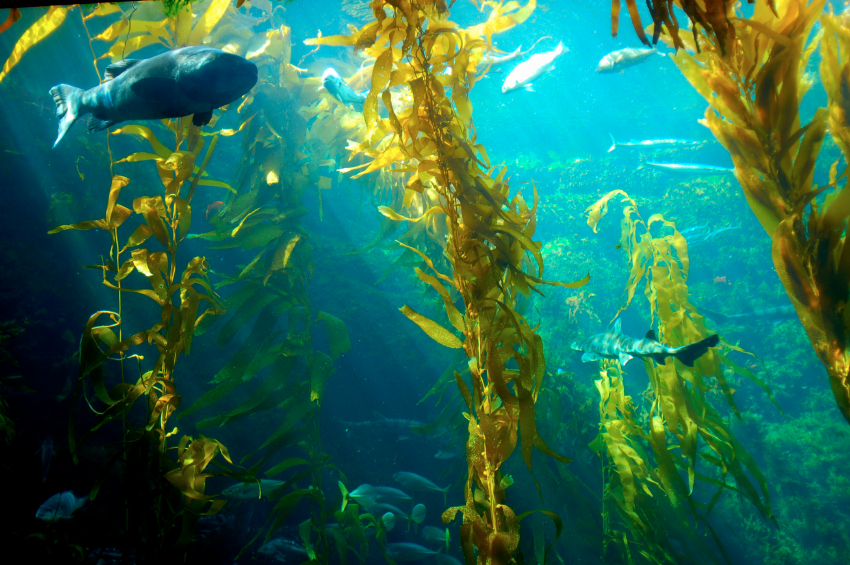
A kelp forest near Catalina Island. (Thomas Farrugia)


JANUARY 13, 2014

Jon Weiner


Researchers from California State University, Long Beach (CSULB) and the Lawrence Berkeley National Laboratory have launched “Kelp Watch 2014,” a scientific campaign designed to determine the extent of radioactive contamination of the state’s kelp forest from Japan’s damaged Fukushima nuclear power plant following the March 11, 2011, earthquake and tsunami.

カリフォルニア大学ロングビーチ校とローレンス・バークレー・国立研究所は、2011年3月11日の地震、津波に続いて起こった日本の損傷した福島第一原発からのカリフォルニア海藻放射能汚染の規模を突き止めるために立案された科学キャンペーン「海藻ウォッチ2014」を立ち上げた。


iStock_000002108143Small
Initiated by CSULB Biology Professor Steven L. Manley and the Berkeley Lab’s Head of Applied Nuclear Physics Kai , the project will rely on samples of Giant Kelp and Bull Kelp from along the California coast.
カリフォルニア大学ロングビーチ校の生物学教授、スティーブン・L・マンリー氏と、バークレイ研究所応用原子物理学所長のカイ・フェッター氏が立ち上げたそのプロジェクトは、カリフォルニア州海岸沿いの大型海藻のサンプルを対象とする。

“The California kelp forest is a highly productive and complex ecosystem and a valuable state resource. It is imperative that we monitor this coastal forest for any radioactive contaminants that will be arriving this year in the ocean currents from Fukushima disaster,” said Manley, an expert in marine algae and kelp.
「カリフォルニアの海藻群集地帯は生産力が高く、複雑なエコシステムと貴重な州の資源があります。今年にも海流によって漂着する福島事故からの放射性汚染物質を調べるのに海岸沿いの海藻群集をモニタリングすることは緊急の課題なのです。」と、海洋藻類及び海藻の専門家であるマンリー教授は話した。

“I receive calls and emails weekly from concerned visitors and Californians about the effect of the Fukushima disaster on our California marine life,” he continued. “I tell them that the anticipated concentrations that will arrive are most likely very low but we have no data regarding its impact on our coastal ecosystem. Kelp Watch 2014 will provide an initial monitoring system at least in the short-term.”
「福島事故が私たちのカリフォルニア州の海洋生物に与える影響について、電話やEメールが関心のあるビジターやカリフォルニア住民から毎週寄せられています。私は、ここに漂着する放射性物質の濃度がとても低いと予測していると答えていますが、カリフォルニア海岸のエコシステムに与える影響についてはデータが全くないのです。海藻ウォッチ2014は少なくとも短期間において最初のモニタリングシステムとなるでしょう。」

The project includes the participation of 19 academic and government institutions and three other organizations/businesses. These participants will sample kelp from the entire California coastline as far north as Del Norte County and as far south as Baja California. The sampling will begin in mid-February and will end in late winter.
このプロジェクトには19名の学者と政府機関、3つの他の組織・企業が参加する。これらの参加者は海藻のサンプルを北はデルノルト郡から南はバハ・カリフォルニア州に到るまでカリフォルニア海岸沿い全域から収集する。サンプル収集は2月中旬に始め、冬後半まで続ける。

“What I have attempted to do is to organize marine scientists and educators from up and down the coastline to collect a large amount of kelp several times a year so that we can ascertain the amount of radioactive material entering our kelp forests,” Manley explained. “The response has been overwhelming.  Recently I was contacted by a scientist in Washington State, who wants to send samples. I said ‘Sure.’”
「私が試みているのは、海藻群集地帯に入ってくる放射性物質の量を確認できるよう、1年間に大量の海藻を集めるためにカリフォルニア海岸の北から南まで海洋科学者や教育者を編成することです。」とマンリー教授は説明した。「その反応は圧倒されるものです。最近サンプルを送りたいとワシントン州の科学者から連絡がありました。もちろん、と答えました。」

Sampling will take place several times in 2014, and processed kelp samples will be sent to the Lawrence Berkeley National Lab’s Low Background Facility for detailed radionuclide analysis. As data becomes available it will be posted for public access.
サンプル収集は2014年中に数度行われ、処理された海藻サンプルはローレンス・バークレー国立研究所のバックグラウンド線量の低い施設へ放射性核種の詳細を分析するために送られる。データは公にアクセスできるよう掲載される。

“Working with Dr. Vetter and his group is a perfect collaboration because of their vast experience in measuring radioactivity in a variety of biological samples, including seaweeds,” Manley noted. “His enthusiasm and support of Kelp Watch 2014 has been most gratifying. If the kelp takes up the radioactive material, we should detect it.”
「様々な海藻を含む生物学的サンプルの放射性物質の測定に幅広い経験のあるフェッター博士と彼のグループと調査するのは完璧な共同研究です。」とマンリー教授は言う。「海藻ウォッチ2014に対する彼の熱意とサポートは、最も喜ばしいことです。もし海藻が放射性物質を取り込んだとしたら、私たちはそれを検出するはずです。」

Vetter, who is also a professor of nuclear engineering at UC Berkeley, pointed out that “UC Berkeley and Berkeley Lab’s analysis within the new Kelp Watch initiative is part of a larger, ongoing, effort to measure Fukushima related radionuclides in a large variety of objects.  We have two main objectives—to learn more about the distribution and transport of these materials in our world, and to make the results and explanations available to the public.
カリフォルニア大学バークレー校の原子技術教授であるフェッター氏は次のように指摘した。「カリフォルニア大学バークレー校とバークレー研究所の海藻ウォッチでの分析は、大量の様々な対象物内の福島関連の放射性核種を測定するための広大な、持続的試みの一部です。私たちに2つの主な目的があります。世界におけるこれら放射性物質の分布と移動についてもっと知り、その結果と説明を人々に知らせることです。

“Making our results available is a critical aspect of our work as it allows us to address concerns about Fukushima radiation levels and to explain the meaning and potential impact of these levels,” he added, “particularly in the context of the natural radiation background(*) we are exposed to in our daily lives.”
「福島からの放射能レベルについて懸念を取り扱い、これらのレベルが与えうる意味と影響を、とりわけ私たちが日々曝されているバックグラウンドの自然放射能(*)を含めて説明する上で、検査結果を人々に知らせることは私たちの研究の重要な局面なのです。

Several institutions—Moss Landing Marine Laboratory (California State University), Marine Science Institute (UC Santa Barbara), Coastal and Marine Institute (San Diego State University) and CSULB—have volunteered to serve as regional processing centers where needed. Also participating are marine scientists from the Universidad Autónoma de Baja California in Baja Norte Mexico.
いくつかの研究所-モス・ランディング海洋研究所(カリフォルニア州立大学)、海洋科学研究所(カリフォルニア大学サンタバーバラ校)、海岸海洋研究所(サンディエゴ大学)とカリフォルニア大学ロングビーチ校-は必要に応じて地域の処理センターの役割を自発的に果してきた。また、メキシコ、デルノルト郡にあるバハ・カリフォルニア大学の海洋科学者たちも参加している。

“At the present time this entire initiative is unfunded by any state or federal agency, with time and costs being ‘donated’ by the participants,” Manley said. “I hope that this changes. USC Sea Grant funded an earlier related study of mine and I hope it or some other funding agency will help fund this more extensive project.
「現在のところ、州や連邦政府からの資金が全く出ていません。時間と経費は参加者の寄付によるものです。」とマンリー教授は話す。「何か変わればよいと思います。南カリフォルニア大学海洋研究補助金は以前私の関連研究に資金を出しました。この更に広域にわたるプロジェクトにどこかの資金機関が援助してくれるのを望んでいます。」

“Still, more participants are signing up weekly,” he concluded. “We encourage scientists, educational institutions and other interested organizations to participate in the collecting and/or processing.”
「まだ更に多くの参加者が毎週申し出ています。科学者、教育機関、その他の興味のある組織にサンプル収集、処理に参加して欲しいと思います。」

Those interested in taking part in the project can contact Manley at Steven.Manley@csulb.edu and should put “Kelp Watch 2014” in the subject line.
コノプロジェクトに参加したい場合は、件名を“Kelp Watch 2014”と明記して マンレー氏に連絡してください。

-CSULB News Release

-------------------------------------------------------------

私たち一般市民に何ができるでしょう?
What can the concerned citizens do?

この研究が終始独立した研究であることを見届けなければなりません。そうすれば、公表された結果を信じることができるでしょう。
We should watch and encourage this project to be able to stay as independent and transparent as possible throughout entire process, so that we can totally trust the results that will be published.

ただし、公表された結果の解釈は各個人がするべきです。その解釈は専門家によって大きく違います。出てきたデータからどのような危険があるのかを判断するのは、各個人次第です。
The interpretation of the results should be done by individual. We know that it is totally different by each expert. It's up to you how you assess the risk from the data.


(*) 
【自然放射能と人工放射能 Natural radiation and man made radiation】

カリウムは体内に入ると、全身に広く分布する。成人の体内にある量は140g(放射能強度、4,000ベクレル)で、1日の摂取量は3.3gである。生物学的半減期は30日とされている。体内に蓄積しない。
一方、放射性セシウム137といった物質は原子力発電所が稼働し始めてから、ここ数十年程度で初めてこの世に産まれた物質であり、我々生物が体内に溜め込まないような防御反応を示すことができないのは当然のこと。人工放射線核種は体内に蓄積してしまう、という点で自然放射線核種とは危険性が全く異なり、癌だけではなく、心疾患、免疫不全障害、知的障害などを引き起こす。
Our body can maintain the amount of K40 (potassium) consistently (for adults, it’s about 140 g, equivalent to 4000bq. Daily consumption is 3.3g) and do not accumulate in our body. On the other hand, our body system cannot maintain the amount of man made radiation like Cesium because it is very new to human’s history and the evolution process might have just started. It accumulates in your body, which causes not only cancer, but also heart disease, immunodeficiency and intellectual disability.


つまり自然放射線と人工放射線で放射線事態には全く違いはないが、自然放射線核種と人工放射線核種では体内における挙動が全く異なるということ。このことを理解していないと、「人間はもともとカリウム40からの放射線被曝を日常的にしているのだから、セシウム137等を気にし過ぎる必要はない」という被曝の害を軽視する原発推進側の学者に言いくるめられてしまうことになる。
Natural radiation and man made radiation is both radioactive themselves, but their behaviors in our body are very different. Now you can understand the claim of some experts, “We regularly expose to K40, so you do not have to worry about Cesium as the amount is much lower than K40” is just a myth.


【Internal exposure and External exposure】

外部被曝と異なり、内部被曝では体内に取り込まれた放射性物質により、それが体外に排出されるまでの間、至近距離から局所的に強い放射線を長い期間継続的に浴び続けるため、低線量でも危険性が高く、繰り返し放射線を受け続けた臓器に癌が発生しやすいとされています。
外部被曝は殆ど到達距離が長いガンマ線から受けるものです。(加えて若干ながらベータ線による外部被曝もあります)
When you take radioactive materials (can be all γ,β,α radiation) in your body, you will expose to them focally and at close range constantly for a long time. This is much more dangerous and you will have much more chance to get cancer or other disease comparing to external exposure (mostly with γ radiation, sometime β radiation as well), which penetrate your body at longer range and its effect is limited.

至近距離から強力な放射線を集中的に一か所に受けるという点で、同じ実効で線量で比較すると内部被曝は外部被曝の600倍から1,000倍ほどの危険性 があると言われています。

The effective dose of internal exposure is 600-1000 times equivalent to external exposure. 

レントゲンや航空機内で浴びる放射線と内部被曝を比較している説明には気をつけましょう。
You should beware if you hear someone explaining the effect of internal exposure by comparing to the exposure from X-ray or flight.


Source http://hibakutokyo.com/for-taking-measures/2-2/  (Japanese)


Related article, data and assuring explanation by comparing to naturally occuring radiation.
 ↓


New Fukushima Radiation Study Will Focus on West Coast Kelp Forests


(FYI: 1pCi = 0.037bq)