Fact
事実
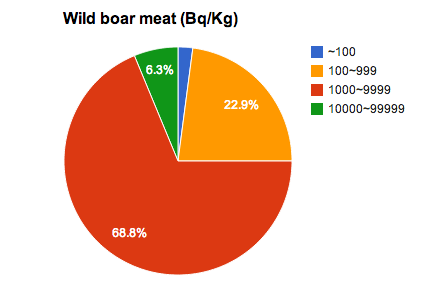
2013年4月、日本・福島の野生イノシシが、過去最高の数値をはじき出した。セシウム134/137が 61,000
Bq/kgという検査結果となった。(1)
What does
this mean?
これは何を意味するのか?
Even if you don't know what a Bq is, 61,000 of anything is a
huge number. But when you consider that
one Bq (Becquerel) is one atomic disintegration every SECOND, this number can
take on gigantic proportions. I will explain more about this later.
ベクレルというのが一体何なのか知識がなかったとしても、61,000というのは何においても巨大な数値である。1Bq(ベクレル)が、一秒につき1原子壊変ということを考慮すると、検出された数値は膨大な規模を呈している。この件に関しては後に詳述する。
First, let’s take a few steps back to gain some
understanding. When the reactors at Fukushima Daiichi exploded and melted down almost three years ago in March 2011, they released enormous amounts of
radioactivity into the atmosphere. Over
200 radioactive elements were released.
Just two of these elements were Cesium 134 and Cesium 137.
理解を深める為、少し客観的に考えてみよう。今からほぼ3年前の2011年3月、福島第一の原子炉が爆発、メルトダウンした際、莫大な量の放射能が大気中に放出された。200種類を超える放射性物質が放出されたのだ。セシウム134、セシウム137は、そのうちのたった2種類にすぎない。
The first thing to grasp is that even though this wild boar
registered 61,000 Bq/kg of Cesium, it probably contains extremely high levels
of many other radioactive isotopes as well.
まず把握しておかなければならないのは、このイノシシはセシウム61,000Bq/kgを記録したが、それだけでなく、他の多くの放射性同位物も極めて高いレベルで含有しているであろう、ということである。
Because Cesium is relatively easy to test for, that makes it
the test of choice for most researchers.
The wild boar in Fukushima was not tested for the other radioactive
elements but you can be sure they are present too.
多くの研究者が、検査が比較的容易であるセシウムを検査対象として選ぶのだ。福島産イノシシの検査では、他の放射性物質の検査は行われなかったが、それらが存在しているということは明白であろう。
The second thing to understand is that radioactive fission
products are constantly decaying in an effort to get to a balanced state. Cesium 134 has a half-life of 2 years. This means that it will take about 20 years
before it has decayed away to it’s non-radioactive state. Cesium 137 has a half-life of 30 years so it
will be about 300 years before it finds it’s balanced state.
次に理解しなければならないのは、放射性核分裂物質は、バランスのとれた状態になるべく、常に崩壊し続けているということである。セシウム134の半減期は2年だ。これは、崩壊し、放射線を放出しない状態になるまで約20年かかる、ということを意味する。セシウム137の半減期は30年である為、放射線を放出しなくなるまで、約300年かかるのである。
Thirdly, every time a radioactive element decays or
disintegrates, it emits radiation that can damage tissue, alter DNA or
otherwise wreck havoc in the human body. (wreckじゃなくてwreakでしょうか?)
第三に、放射性物質が崩壊、または分解する度に、細胞組織にダメージを与え、DNAを変形させ、人体に著しい損傷を与えうる放射線を放出ということが挙げられる。
And finally, one Becquerel equals just one of these
disintegrations happening every second. When the researchers found 61,000
Becquerels in that kilogram of wild boar, that means that that kilogram of meat
had 61,000 disintegrations going off in it EVERY SECOND.
そして最後に、1ベクレルというのは、これらの崩壊が1秒ごとに1回起こることである。イノシシ肉から、1キロ当たり61,000ベクレルが検出されたということは、1秒ごとに放射性崩壊が61,000回起こっている、ということを意味する。
And that’s just the
Cesium disintegrating. All the other radioactive elements that are in the meat
are also decaying and releasing damaging radiation every second as well – we
just don’t have the number for the other elements because no one tested for
them.
そしてこれはセシウムに限っての放射性崩壊にすぎない。肉に含有される他の全ての放射性物質もまた、毎秒崩壊し続け、ダメージを与える放射線を放出し続けるのだ。他の放射性物質に対する数値が不明なのは、誰も検査していないからにすぎない。
Let’s assume that a person is unfortunate enough to eat a
piece of that wild boar. Maybe they
would have an 8 ounce wild boar steak. There are 2.2 pounds in every kilogram
so ½ a pound is equivalent to .227 kg. That 8 ounce steak has 13,847
disintegrations going off each second.
When the unfortunate person ingests the meat, those 13,847
disintegrations are then going off inside his body every second.
不幸にもその野生イノシシ肉を食べてしまった人物がいたとしよう。おそらく8オンス(226.8g)のイノシシステーキを食べるだろう。1キロは2.2ポンド、つまり0.5ポンドは0.227kgである。8オンスのステーキは、毎秒13,847回の放射性崩壊を起こす。その不運な人物がその肉を食べてしまうと、この13,847回という放射性崩壊が、彼の体内で1秒後ごとに起こってしまうということになる。
If you do the math – that equates to almost one million two
hundred thousand disintegrations going on in the body in just one day.
計算すると、たった1日で約120万回の放射性崩壊が体内で起こるということになる。
Is this a
problem?
これは問題なのか?
 When
Cesium gets into the body, the body thinks it is potassium so it goes
everywhere. “It tends to concentrate
most highly in the brain, muscle, ovary and testicles. There it can cause brain
cancer, muscle cancers (rhabdomyosarcomas), ovarian or testicular cancer and,
most importantly, mutate genes in the eggs and sperm to cause genetic diseases
in future generations.” (2)
When
Cesium gets into the body, the body thinks it is potassium so it goes
everywhere. “It tends to concentrate
most highly in the brain, muscle, ovary and testicles. There it can cause brain
cancer, muscle cancers (rhabdomyosarcomas), ovarian or testicular cancer and,
most importantly, mutate genes in the eggs and sperm to cause genetic diseases
in future generations.” (2)
セシウムは体内に取り込まれると、体はそれをカリウムだと認識してしまう為、体の隅々まで行き渡らせてしまうのだ。「それは脳、筋肉、卵巣、睾丸に最も多く集まりやすいという傾向がある。脳の癌、筋肉の癌(横紋筋肉腫)、卵巣または睾丸の癌、そして最も懸念すべきこととしては、次世代の遺伝性疾病の原因となる卵子や精子の遺伝子突然変異の原因となり得る、ということである」(2)
With well over a
million disintegrations going on inside the body, eating such a piece of meat
would most assuredly result in some serious damage to the body.
100万回を大きく超える放射性崩壊が体内で発生することになるので、こういった肉を摂取すると、人体は深刻な損傷を受ける、ということに疑いの余地はないだろう。
Levels
of Cesium Rising in Fukushima, Japan
福島でのセシウムレベルの上昇
 These levels of Cesium in wild boar have
been increasing since March 2011. In March, 2013, 10% of the wild boar samples
taken in Fukushima measured 10,000 Bq/kg of Cesium 134/137. Minamisoma City had
the highest reading at 56,000 Bq/kg.
Researchers did not find one sample of meat that was not contaminated
with Cesium. (3)
These levels of Cesium in wild boar have
been increasing since March 2011. In March, 2013, 10% of the wild boar samples
taken in Fukushima measured 10,000 Bq/kg of Cesium 134/137. Minamisoma City had
the highest reading at 56,000 Bq/kg.
Researchers did not find one sample of meat that was not contaminated
with Cesium. (3)
イノシシのセシウムレベルは、2011年3月以降上昇し続けている。2013年3月に検査された福島産イノシシのうち10%が、1kgあたり1万ベクレルのセシウム134/137を記録した。。南相馬市では最も高い数値、56,000Bq/kgだった。セシウムに汚染されていない検体は、1つも無かった。(3)
Four months before that, in November 2012,
wild boar caught 50 kilometers from the Fukushima plant, registered 33,000
Bq/kg. By April 2013, 5 months later,
the levels of Cesium had almost doubled. (4)
その4ヶ月前、2012年11月、福島の発電所から50キロのところで捕獲されたイノシシが、33,000Bq/kgを記録した。それから5ヶ月後の2013年4月までの間に、セシウムの数値はおよそ倍になったのだ。(4)
Twelve months previous, in November 2011
and 8 months after the disaster, the wild boar in Fukushima was tested at
14,600 Bq/kg – less than half what was found 12 months later. (5)
その12ヶ月前、つまり震災から8ヶ月後の2011年11月、福島産イノシシから14,600Bq/kgが検出されている。12ヶ月後に検出される数値の半分以下である。(5)
The current (September, 2013) levels of Cesium in wild boar
are now 400% higher than in November 2011.
現在(2013年9月)のイノシシのセシウムレベルは、2011年11月と比較して400%高い。
Why wild boar have such high levels of
Radioactivity
イノシシの放射能レベルがこれほど高いのは何故か
Wild boars are
particularly susceptible to radioactive contamination. This is because they eat
mushrooms and truffles which are particularly good at absorbing the
radioactivity that has fallen on the soil and
in the water.
イノシシは放射能汚染の影響を極めて受けやすい。土や水に降り注いだ放射能を吸収しやすい性質を持つキノコやトリュフを、食料としているからだ。
Fungi are one of the
food items low on the food chain that concentrate radioactivity. The wild boars are good at rooting out the
fungi. They eat large amount of these
foods. In fact, the mushrooms and
truffles constitute the main part of their diet.
菌類は、食物連鎖の下方に位置し、放射能を濃縮する性質を持つ。イノシシは、菌類を見つけ出すことに長けている。彼らは、そういったものを大量に摂取するのである。実際、キノコやトリュフといったものは、イノシシの主要な食料源なのだ。
Add to that the fact that boars are near the top of the food chain and thus, as they keep eating the radioactive fungi, they continue to concentrate the radioactivity and build up the levels of radioisotopes in their bodies. (6)
更に言うと、イノシシは食物連鎖の上位に位置する為、彼らが放射能を含む菌類を食べ続けることにより、体内で放射能が濃縮され続け、放射性同位元素の数値が高まってしまうということになる。(6)
Same phenomenon observed after the Chernobyl
catastrophe
チェルノブイリの事故後に観測されたものと同じ現象
This same
phenomenon was observed after the nuclear meltdown in Chernobyl in 1986. That
disaster contaminated all of Europe and the wild boar across Europe built up
high levels of radioactivity.
これと同じ現象は、1986年のチェルノブイリ・原発メルトダウンの後にも観測されている。この惨事によってヨーロッパ全土が汚染され、ヨーロッパ中のイノシシの放射能レベルが上昇した。
Recall that Cesium
137 is extremely long lasting and will be around for 300 years until it has
decayed away. That is why, over a
quarter of a century later, the wild boars in Europe continue to show high
levels of contamination.
セシウム137は極めて長い間存在し続けるということ、放射線を放出しなくなるまで約300年かかるということを思い起こそう。それが、4半世紀を経てなお、ヨーロッパのイノシシが高レベルで汚染され続けている原因である。
In 2010, 24 years after the
catastrophe, wild boar found near the Bavarian/ Czechoslovakian border were
shown to have Cesium levels of 7000 Becquerels per kilogram.
あの惨事から24年を経た2010年、バイエルン州とチェコスロバキアの国境付近で発見されたイノシシは、セシウム7,000Bq/kgだった。
 In 2011, tests
done in Austria found radioactive Cesium in wild boar. The levels recorded were
1060 Bq/kg. And where did the researchers find the wild boar meat that they
tested? It was being sold for human consumption in Austrian supermarkets! (7)
In 2011, tests
done in Austria found radioactive Cesium in wild boar. The levels recorded were
1060 Bq/kg. And where did the researchers find the wild boar meat that they
tested? It was being sold for human consumption in Austrian supermarkets! (7)
2011年、オーストリアで行われた検査で、イノシシから放射性セシウムが検出された。1060Bq/kgという数値だった。検体のイノシシ肉はどこからのものだったのか?それは、オーストリアのスーパーで食用として販売されていたのである!(7)
In 2012 it was
reported that wild boars in the Sumava National Park, southwest Bohemia, still
have Cesium from the Chernobyl accident in their bodies. (8)
2012年、南西ボヘミア・スマヴァ国立公園のイノシシが、未だにチェルノブイリ事故由来のセシウムを含有しているということが報告された。(8)
In December 2012, Czech
biochemists found high levels of radioactivity in the wild boar in their
country – over 10 times over the limit. (9)
2012年12月、チェコの生物学者は、限界値の10倍以上という高レベルの放射能を自国のイノシシから発見した。(9)
In March 2013, wild boars in the woods of Valesia in north east Italy
2013年3月、北東イタリアのヴァレンシアの森のイノシシからは、600Bq/kgを超える数値が検出された。(10)
In Germany
ドイツでは、「誘因」レベル、つまり、イノシシを食用として販売する際の基限界値が、600Bq/kgである。
Radioactive meat found in U.K.
イギリスで発見された、放射能汚染された肉
The Cesium
contamination from Chernobyl didn’t just stay in Europe. It was also found in
the United Kingdom, about 1500 miles away from Chernobyl.
チェルノブイリ由来のセシウム汚染は、ヨーロパ内に留まらなかった。チェルノブイリから約1500マイル(2414キロ)離れたイギリスでも見つかったのだ。
Before the nuclear catastrophe in Chernobyl the average level of
radioactive Cesium found in meat in the U.K. was less than 0.5 Bq per kilogram. ---Susan, wild meat or farmed meat?
チェルノブイリの原発事故以前、イギリスにおける肉の放射性セシウムの平均数値は0.5Bq/kg以下だった。
Before Chernobyl,
the total amount of Cesium consumed per year by one person totalled was around 100 Bq
from all sources - plant, milk and animal sources. (This radioactivity was left over from the
nuclear bomb testing era.)
チェルノブイリの事故以前、1人が1年間で摂取するセシウムは、植物性のもの、ミルク、動物性のものなど、全ての食べ物を合わせて、約100ベクレルだった。(この放射能は、核実験時代からの残留物である)
After Chernobyl,
in the UK the levels of Cesium rose so that the government put a ceiling on the
level allowed in meat for consumption. They tested meat and excluded all meat
that was over 1,000 Bq per kilogram.
チェルノブイリの事故後、イギリス国内でのセシウム数値が上昇した為、政府は食肉の限界値を制定した。食肉を検査し、1,000Bq/kg以上のものは全て排除したのだ。
Words of caution
注意事項
In spite of the
fact that radioactive meat is still being found, the U.K. testing and the
“contaminated meat exclusion program” was dropped completely in 2012. People in
the UK can now eat radioactively contaminated sheep or other meat, with no
radiation measurement or warning labels at all.
放射能を含有する肉が未だに発見されるにもかかわらず、イギリスでの検査、そして「汚染された肉の排除プログラム」は、2012年、完全に中止された。現在、放射能測定や、注意書きの標示などは全く無く、イギリスの人々は、放射能に汚染された羊や他の動物の肉を食べてしまう可能性がある、という状態なのである。
This is not only
a warning to anyone travelling and eating in the U.K. You don’t have to be in
the UK to get this meat - This also means that this meat can be exported to other
countries like the U.S. and Canada.
これは、イギリスを旅したりイギリスで食事したりする人だけに関係のあることではない。こういった肉は、イギリス国外でも手に入ってしまうのである。アメリカやカナダといった他国へ、輸出されてしまう可能性があるのだ。
Canada allows
foods with Cesium levels up to 1000 Bq/kq to be imported. The U.S. government
allows levels up to 1200 bq/kg. (11) These highly lax standards mean that foods
that other countries will not allow their citizens to eat, could be imported to
the U.S. and Canada
カナダは輸入品に対し、セシウム1,000Bq/kgまで容認している。アメリカ政府は1,200Bq/kgまで容認している。(11)この恐ろしく甘い基準値が何を意味しているのかというと、各国が自国内では食用不可としている食品が、アメリカやカナダには輸入されてしまう可能性がある、ということである。
In Japan, the level of Cesium allowed in their food used for human
consumption is 100 Bq/kg. Beware any
food imported from Japan. The Canadian and U.S. governments allow the
importation of food with radioactive levels well above those allowed in Japan.
日本の食品のセシウム基準値は100Bq/kgである。日本からの輸入品に注意しよう。カナダやアメリカの政府は、日本の基準値を超える放射能レベルを持つ食品の輸入を容認しているのだから。
A small Canadian study
カナダでの調査
One day going into
our local butcher shop in north western Canada, we were surprised to see a sign
that read “wild boar”. Having followed
the radiation levels rising in wild boar in Japan Drumheller Albert
,Canada
ある日、カナダ北西部の精肉店で「野生イノシシ」という標示を見て、我々は驚いた。日本のイノシシの放射能数値の上昇を鑑みれば、まず知りたいのは、「このイノシシはどこから来たのか?」ということである。答えは・・・カナダ・アルバータ州のドラムヘラーという街である。
Being aware that
the fallout from Fukushima has gone many times around the northern hemisphere
in the jet stream, we thought it would be interesting to find out if Canadian
wild boar had escaped the Fukushima contamination. If it had, then that would also indicate a
possibility that the wild mushrooms, fungi and other food they eat may not be contaminated
either.
福島からの放射性降下物が、既に何度もジェット気流に乗って北半球を循環している流されてきている、ということは知っていたので、カナダ産イノシシが福島由来の汚染を免れているのかどうかを調べることは、興味深いことであった。もし汚染されていないのであれば、彼らが食料とする野生のキノコや菌類、その他の食べ物も、汚染されていないかもしれない、という可能性を示すものとなる。
We sent a kilogram
of the wild boar meat to a laboratory certified to test for radionuclides. (GEL Laboratories LLC)
我々は、放射性核種の検査を許可されている研究所に、1キロのイノシシ肉を送った。

What is minimum detection limit and negative results?
検出限界、マイナスの数値の意味は?
The concept of a minimum detection limit (MDL) is established to determine the statistical likelihood that the sample contains activity that is truly greater than the instrument background.検出限界は検体が、バックグランドよりも本当にレベルの高い放射性物質を含んでいるのかの統計的可能性を決定するために定められる。
Identifying a sample as containing activity greater than background when it actually is not is known as a Type I error. As with most laboratories, the BNL Analytical Laboratory sets its acceptance of a Type I error at 5% when calculating the minimum detection limit for a given analysis. 検体が実際にはバックグランドより放射性物質が少ないのに、より多く含んでいるという結果がでることは「タイプIエラー」として知られている。ほとんどの研究所、BNL分析ラボでは、分析に使われる検出限界を計算する際、「タイプIエラー」を5%まで受け入れるように定める。
That is, for any value which is greater than or equal to the MDL there is 95% confidence that it represents the detection of true activity. Values, which are less than the MDL may be valid, but they have a reduced confidence associated with them. Therefore, all data is reported regardless of its value.つまり、検出限界以上、あるいは同等の場合、95%は確実に実際の放射性物質のレベルを検出しているということになる。検出限界以下の結果は有効であるかもしれないが、確実性が低くなる。故に数値に関わらず、全てのデータが報告される。
At very low sample activity levels, close to the instrument background, it is possible to obtain a sample result, which is less than the back ground. When the background activity is subtracted from the sample activity to obtain a net value, a negative value results. In such a situation, a single radiation event observed during a counting period could have a significant effect on the result. Subsequent analysis may produce a net result that is positive. Therefore, all negative values are retained for reporting as well. (by Plaza & Pante Consultants)バックグランドのレベルと近い微量の放射性物質のレベルでは、バックグランド以下の場合でも検体の結果を得ることができる。検体の値からバックグランドの値を引いて、マイナスの値が結果として出る。このような場合、測定中のたった1つの放射性の事象が結果に重大な影響を及ぼすことになる。引き続き分析をすることで、結果の数値がプラスになることがある。ゆえに、マイナスの値も報告される。
Although negative radioactivity is physically impossible, the inclusion of negative results allows better statistical analysis of the data. (by RadNet)マイナスの値は物理的に不可能であるが、結果を含めることでデータの統計的分析をより質の良いものにできる。
The lab was able
to test for Cesium levels as low as 3 Bq/kg.
The lab did not find any Cesium in the sample. There may be Cesium at levels lower than 3 Bq
but the sample of wild boar from northern Canada did not have the incredibly
high levels seen to this day in Europe and Japan because of the nuclear
disasters at Chernobyl or Fukushima.
この研究所での検査限界は3bq/kgだった。検体からセシウムは検出されなかった。3ベクレル以下のセシウムは存在したかもしれないが、カナダ北部のイノシシからは、現在ヨーロッパや日本で検出されているような、チェルノブイリ・福島由来の極めて高い数値は検出されなかった。
Some practical advice
実用的アドバイス
1. Always
ask where the wild boar was captured.
イノシシが何処で捕えられたのか、必ず尋ねること。
If
you see wild boar on the menu the next time you go traveling, are in a
restaurant, in the butcher or food store, be sure to ask where the boar comes
from.
旅行中、もしくはレストラン、精肉店、食料品店に行った際、メニューにイノシシを見つけたら、そのイノシシがどこからのものか必ず尋ねること。
2. Avoid
European and Japanese wild boar.
ヨーロッパ産、日本産の野生イノシシを避けること。
If
you are in Europe, it will not be too difficult as, mostly, you will not find
it on the menus in most restaurants.
When asked, most restaurants will discreetly tell you that “wild boar is
not in season right now”. Beware though, and recall the wild boar that was
found being sold in the Austrian super market.
(Dr. Helen
Caldicott goes as far as saying she won’t eat anything that was grown in
Europe).
ヨーロッパでは、メニューにイノシシがあるレストランは、それほど多くはない。多くのレストランは、尋ねられれば、こんな風に慎重に答えるだろう。「イノシシは現在旬ではないのです」と。しかし、オーストリアのスーパーで販売されていたイノシシのことを忘れてはいけない。
(ヘレン カルディコット博士は、ヨーロッパ産のものは決して食べない、とまで公言している)
3. If you want to eat wild
boar – Canadian may be a safer bet.
もし野生イノシシを食べたければ、カナダ産が安全であろう。
Fukushima Wild boar test results published on December 11, 2013 (By Ministry of Health, Labour and welfare Japan)
H25 = Year 2013
H25 = Year 2013

References 参照文献
1. http://fukushima-diary.com/2013/04/61000-bqkg-from-wild-boar-meat-in-fukushima-the-highest-reading-ever/
2. http://www.helencaldicott.com/2011/07/internal-radioactive-emitters-invisible-tasteless-and-odorless/
3. http://fukushima-diary.com/2013/03/over-10000-bqkg-measured-from-10-of-wild-boar-meat-sample-in-fukushima/
4. http://www.infiniteunknown.net/2012/11/23/wild-boar-at-33000-bqkg-of-radioactive-cesium-50-km-from-fukushima-plant/
5. http://fukushima-diary.com/2011/11/14600-bqkg-from-wild-boar-in-fukushima/
2. http://www.helencaldicott.com/2011/07/internal-radioactive-emitters-invisible-tasteless-and-odorless/
3. http://fukushima-diary.com/2013/03/over-10000-bqkg-measured-from-10-of-wild-boar-meat-sample-in-fukushima/
4. http://www.infiniteunknown.net/2012/11/23/wild-boar-at-33000-bqkg-of-radioactive-cesium-50-km-from-fukushima-plant/
5. http://fukushima-diary.com/2011/11/14600-bqkg-from-wild-boar-in-fukushima/
9. http://www.ceskapozice.cz/en/news/society/czech-boars-10-times-over-permitted-radiation-level
10. http://nuclear-news.net/2013/03/08/startling-new-find-boars-radioactive-in-the-woods-of-valsesia-ne-italy-more-than-600-bqkg/
10. http://nuclear-news.net/2013/03/08/startling-new-find-boars-radioactive-in-the-woods-of-valsesia-ne-italy-more-than-600-bqkg/